


Sunset Whale Watching in the Exmouth Gulf: A Quiet Kind of Magic
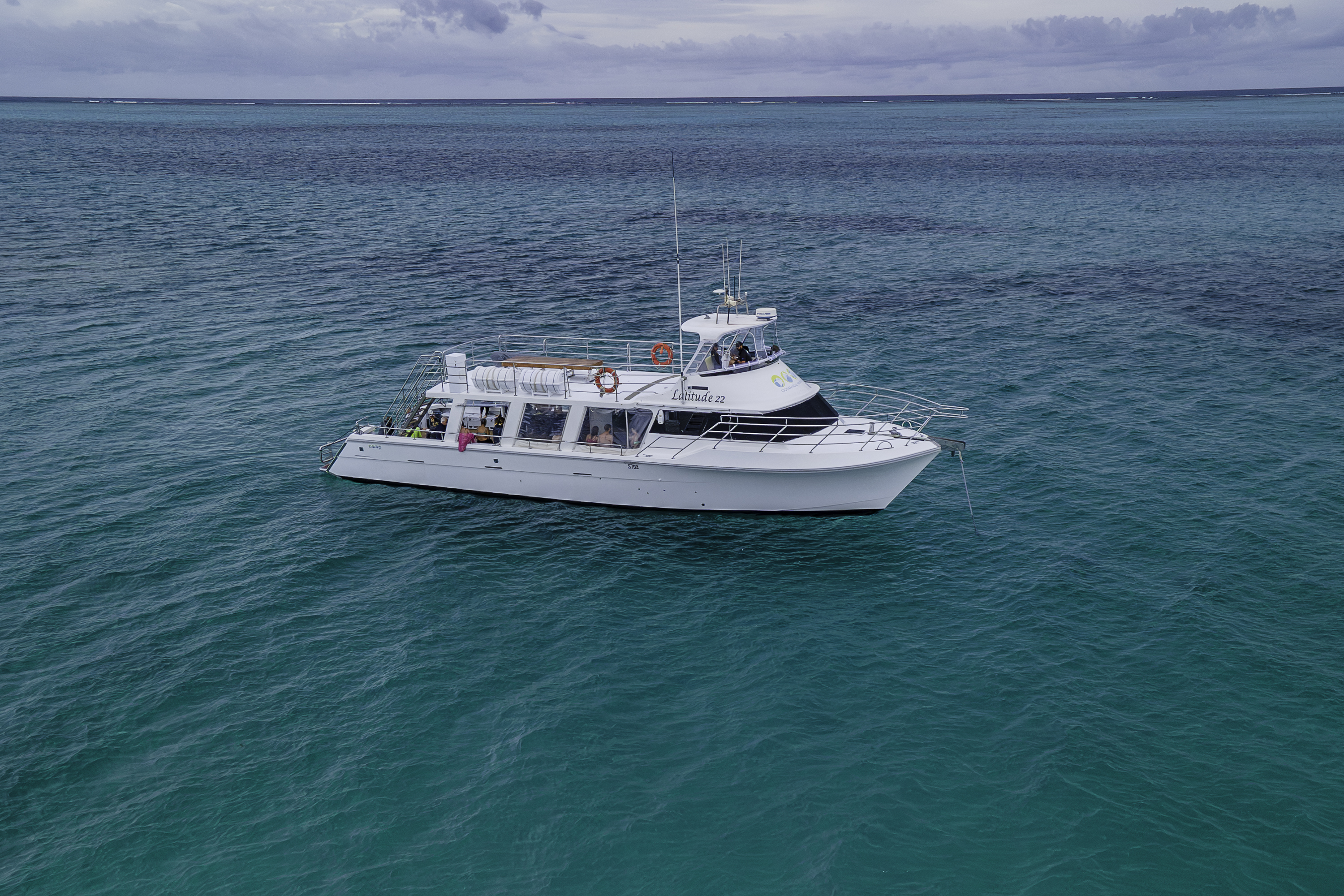

There are tours that leave you breathless with excitement — swimming with Whale Sharks, snorkelling vibrant coral gardens, or encountering manta rays in clear blue water.
And then there is sunset whale watching.
It’s different.
Quieter. Slower. More emotional in a way that’s hard to explain until you’ve experienced it yourself along the waters of the Ningaloo Reef.
At Ocean Eco Adventures, we often say that no two days on the ocean are ever the same — but with humpback whales, that couldn’t be more true. Some days are full of energy and movement. Other days feel almost still, like the ocean is holding its breath.
And both are equally unforgettable.
A Journey That Begins Long Before We See Them
By the time humpback whales reach Exmouth, they have already travelled thousands of kilometres along their annual migration route. What we see in the Exmouth Gulf is just one small moment in a much larger journey — a pause between movement, rest, and instinct.
These waters become a resting ground for mothers and calves during the southern migration. A place where life slows down just enough for us to witness something incredibly rare.
Sometimes we are greeted with energy — breaches, tail slaps, and the powerful bursts of a whale communicating across distance.
Other times, we find something far more subtle.
A mother and her calf, moving slowly through the water. Resting. Staying close. Trusting the space around them.
Watching Whales Rest Is Something You Don’t Expect to Feel Emotional About
sunset whale watching whale right next to boat on tour guests pointing at whales from boat whale right next to guests on tour humpback whale mum and calf whales travelling in turquoise waters humpback whale right next to the boat
There is something deeply moving about observing a whale at rest.
Not performing. Not breaching. Not rushing through the water.
Just existing.
In those moments, you realise how rare it is in the natural world to witness an animal that large, that intelligent, and that vulnerable — choosing to slow down in your presence.
A mother whale resting with her calf feels especially significant. There is a quiet trust there that is difficult to describe. Two animals moving through an enormous ocean, allowing a small vessel to observe them at a respectful distance.
It never feels like something we take part in.
It feels like something we are allowed to witness.
Moments of Energy, Power, and Pure Wildness
humpback whale breaching humpback whale pec slapping next to boat humpback whale breaching humpback whale breaching in background humpback whale breaching at sunset humpback whale breaching at sunset
Of course, not every encounter is still and gentle.
Humpback whales are full of personality, and when they choose to express themselves, the ocean becomes something entirely different.
We see:
Breaching — entire bodies launching out of the water
Tail slapping — powerful strikes against the surface
Pectoral slapping — rhythmic displays across the waves
Heat runs — fast, energetic movements often involving multiple whales
These moments remind you that you are not observing something distant.
You are sharing space with one of the most powerful animals on Earth.
And yet, even in those high-energy moments, there is a sense of balance. Nothing feels chaotic. It feels natural. Intentional. Ancient.
One of the Great Conservation Success Stories of the Ocean
What makes humpback whale watching even more meaningful is knowing how close we came to losing them.
At the height of commercial whaling in Western Australia, humpback whale populations were reduced to an estimated 600–900 individuals. A number so small it is almost hard to imagine today.
After the ban on hunting humoback whales in 1967, something remarkable happened.
The population slowly recovered.
Today, there are now over 50,000 humpback whales migrating along the Australian coastline — one of the greatest conservation recovery stories in modern history.
In a single human lifetime, we went from hunting them… to protecting them… to watching them return in extraordinary numbers.
And in places like Ningaloo, during peak season, it becomes almost impossible not to see them.
A Shared Ocean, A Shared History
There is something humbling about the idea that some of the whales we see today may be descended from individuals that once survived the era of whaling.
And even more extraordinary to consider that these same animals now move peacefully past vessels — boats not unlike the ones that once hunted them — as they rest, migrate, and raise their young.
That contrast stays with you.
It speaks to resilience. To change. To time.
And perhaps, to forgiveness in a way that only nature can express.
Why These Moments Matter So Deeply

There is a reason people are drawn to whales.
It is not just their size, or their power, or even their beauty.
It is the feeling they create in us.
A sense of connection to something ancient, intelligent, and deeply aware of its place in the ocean.
On sunset whale watching tours in the Exmouth Gulf, that feeling is amplified. The light softens, the ocean settles, and the day begins to slow down. And somewhere out there, a whale surfaces beside us — unhurried, unbothered, simply moving through its world.
And for a moment, we are allowed to share it.
A Final Thought
At Ocean Eco Adventures, we often say that whale watching is not about chasing moments.
It is about being present for them when they happen.
Sometimes it is excitement. Sometimes it is stillness. Sometimes it is something in between that you cannot quite name.
But it always leaves you with the same feeling:
That the ocean is far bigger, older, and more connected than we ever truly realise.
And that we are incredibly lucky to witness even a small part of it.


Comments